
Breaking Bread, Building Power: The Fight for Firefighter Patrick Thomas Continues
Satenik Margaryan, Ph.D.

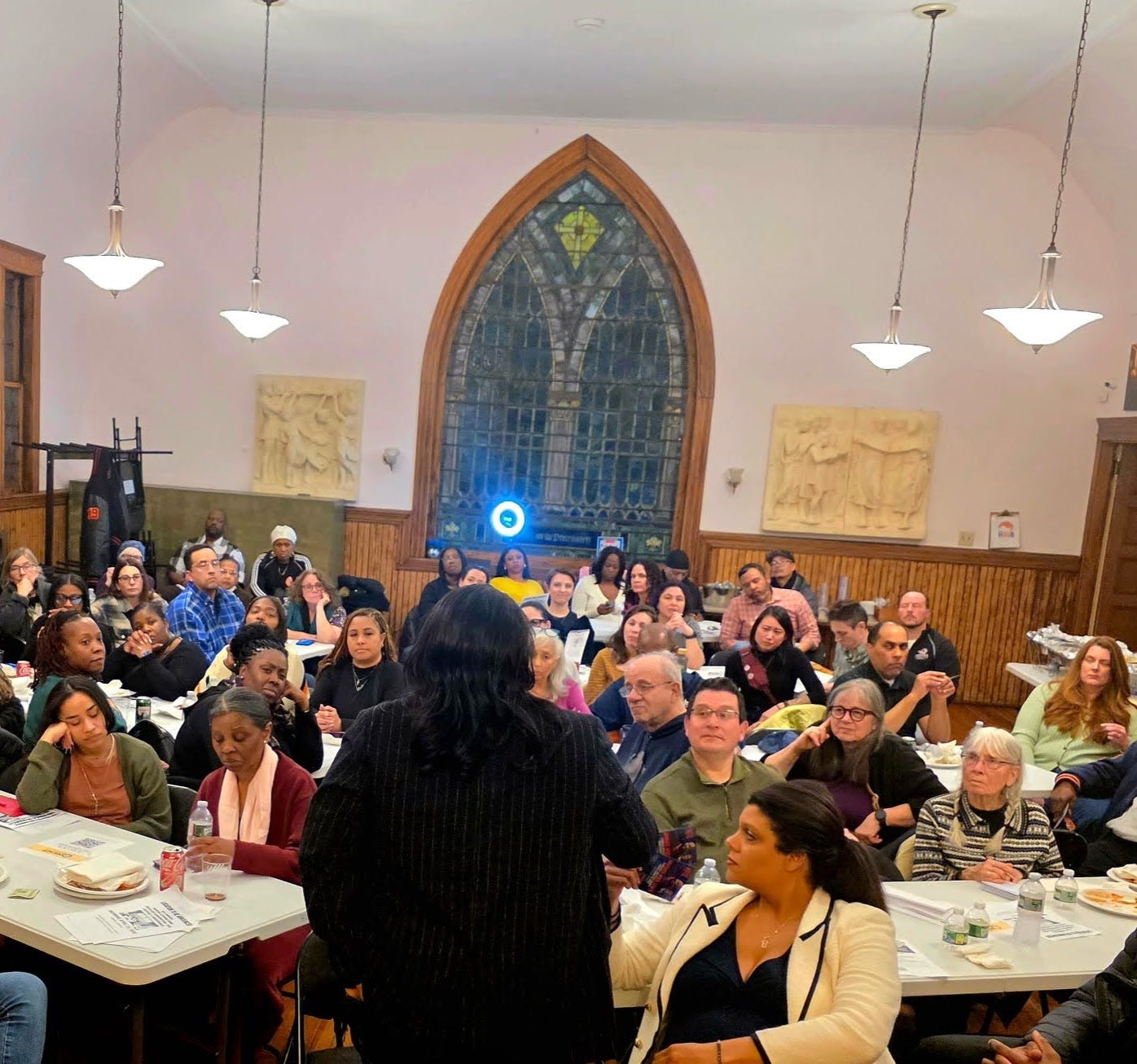
Last night we held the second community meeting in support of Firefighter Patrick Thomas. The gathering was again organized by Black Citizens of Bloomfield and NJ Residents Over Everything (NJ R.O.E.). About two months ago, we convened a powerful first meeting; this one felt overdue—not because momentum had faded, but because the situation demanded continued, visible pressure. The focus of this meeting was to turn solidarity into action—joining the NAACP, participating in the letter-writing campaign, preparing public comment, and building grassroots organizing.
The room reflected that. People came from across Essex County and beyond: Bloomfield, East Orange, Orange, Newark, and Nutley, and a wide range of organizations were represented, including the Vulcan Pioneers of New Jersey, the NAACP (Oranges and Montclair), People’s Organization for Progress, and many community members who came not for optics, but for action.
The meeting was held at HUUB in Orange, and the location mattered. It wasn’t Bloomfield, but it was exactly the kind of community venue Bloomfield lacks: affordable, welcoming, and not controlled by a municipal entity or a private gatekeeper. The space was laid out for what a real community meeting requires—one room for speeches and listening, another with tables for eating, sharing, and talking. Bloomfield desperately needs a “third place” like this: a civic home for residents that isn’t town hall, isn’t a council chamber, and isn’t someone’s business. If we’re serious about building community in Bloomfield, we need spaces that actually make community possible.
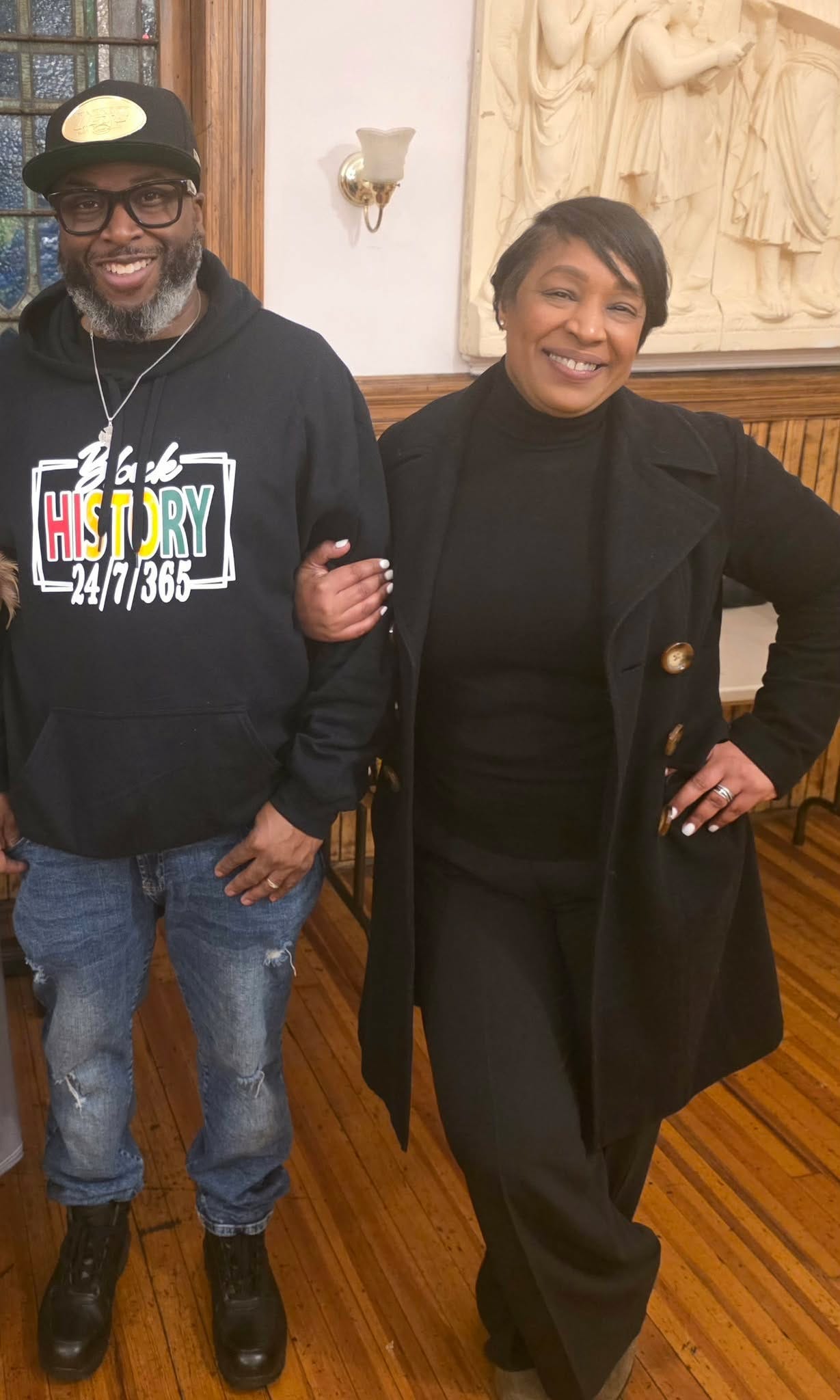
These meetings have been powered by the force and clarity of Black women—Kasey Dudley and Joy Willis—with ongoing support from Sen. Britnee Timberlake. Without their tireless work, I doubt Firefighter Thomas would have received this level of sustained, organized support.
A different kind of opening
The meeting began under the guidance of facilitator Chantilly Mers, who immediately set a tone that felt intentional rather than performative. She asked us to introduce ourselves to people near us but not the people we arrived with. Since I was sitting with my friends Stefanie and Christine, we turned to two elderly Black women seated in front of us. That conversation alone could have been its own meeting.
Neither woman lived in Bloomfield, but one had worked there for decades as a social worker. As we discussed Patrick Thomas’s situation, she recalled the period when Bloomfield decided to ban NJ Transit buses from traveling through downtown town and how local stores and businesses fought to bring the buses back, ostensibly for commerce, but in reality to bring back Black and brown customers (I definitely need to do more research on this, fascinating). The second woman described being stopped by Bloomfield police and thrown face-down on the ground. What emerged in just a few minutes was not a debate about one incident, or one employee, or one “bad apple.” It was a shared understanding of systems—how racism operates through institutions, and how Bloomfield repeatedly tries to manage the optics of racism rather than uproot the structure. We also talked about why racism in a firehouse is uniquely corrosive: firefighters literally depend on one another for survival. A department cannot preach brotherhood while tolerating hate.
Looking around the room, I saw people truly engaging: listening, connecting, exchanging contact information, comparing experiences. Chantilly then asked attendees to propose questions for Patrick Thomas for the second half of the meeting. People asked for updates on the case and, crucially, what action was needed next.
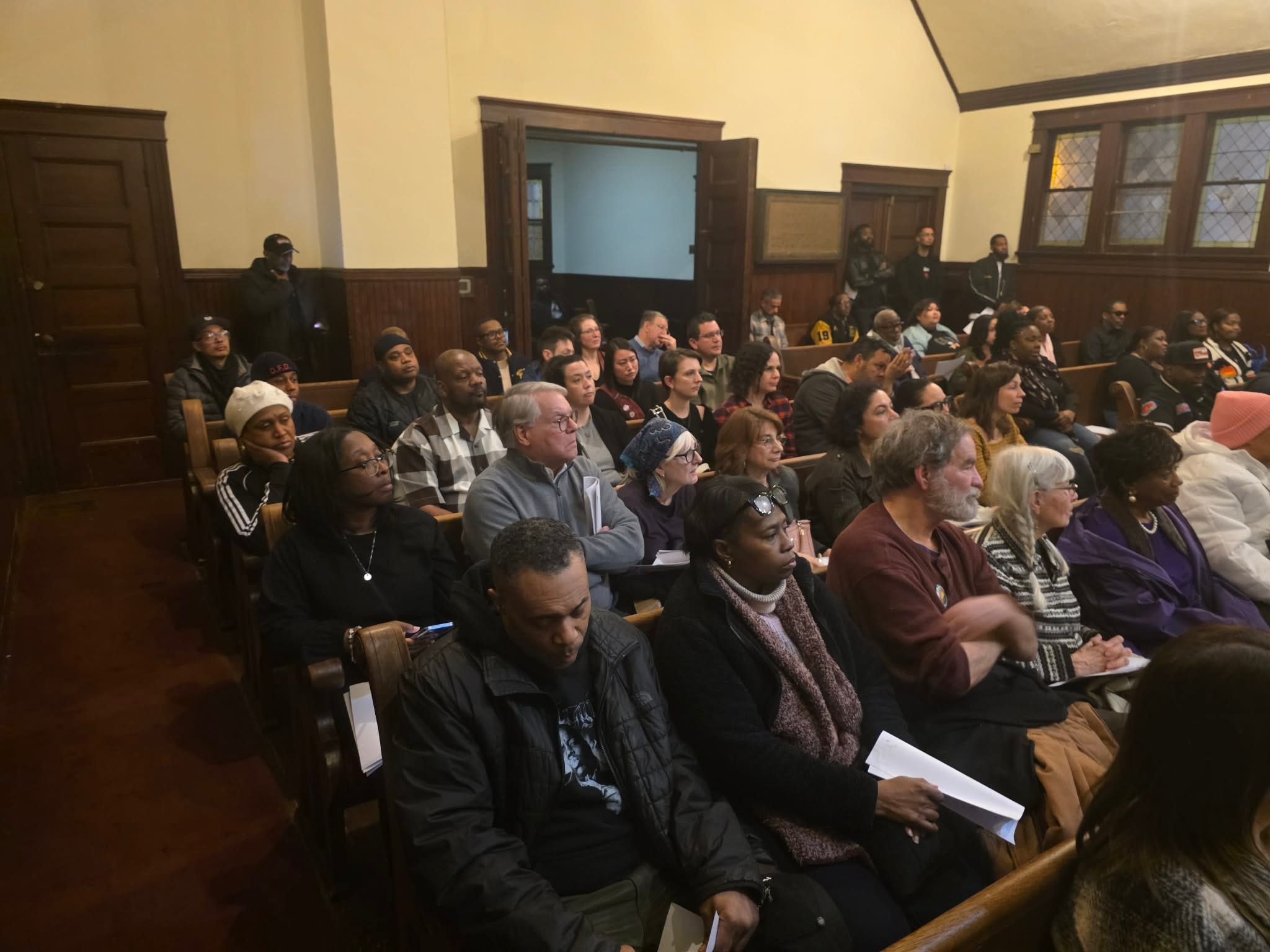
What we Heard
Several invited speakers addressed the audience in the Parish Hall of HUUB. Among them were Mayor Ras Baraka.
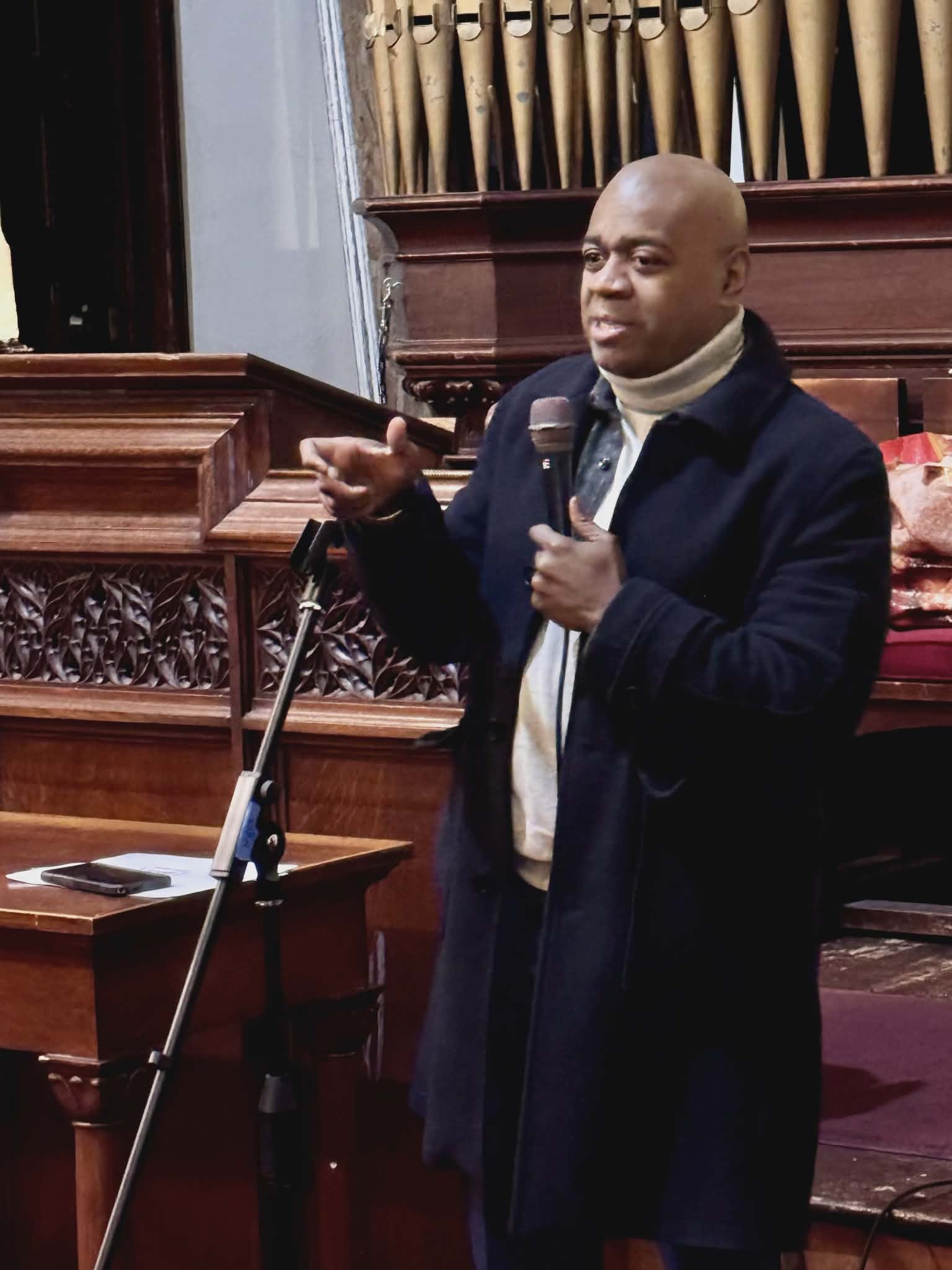
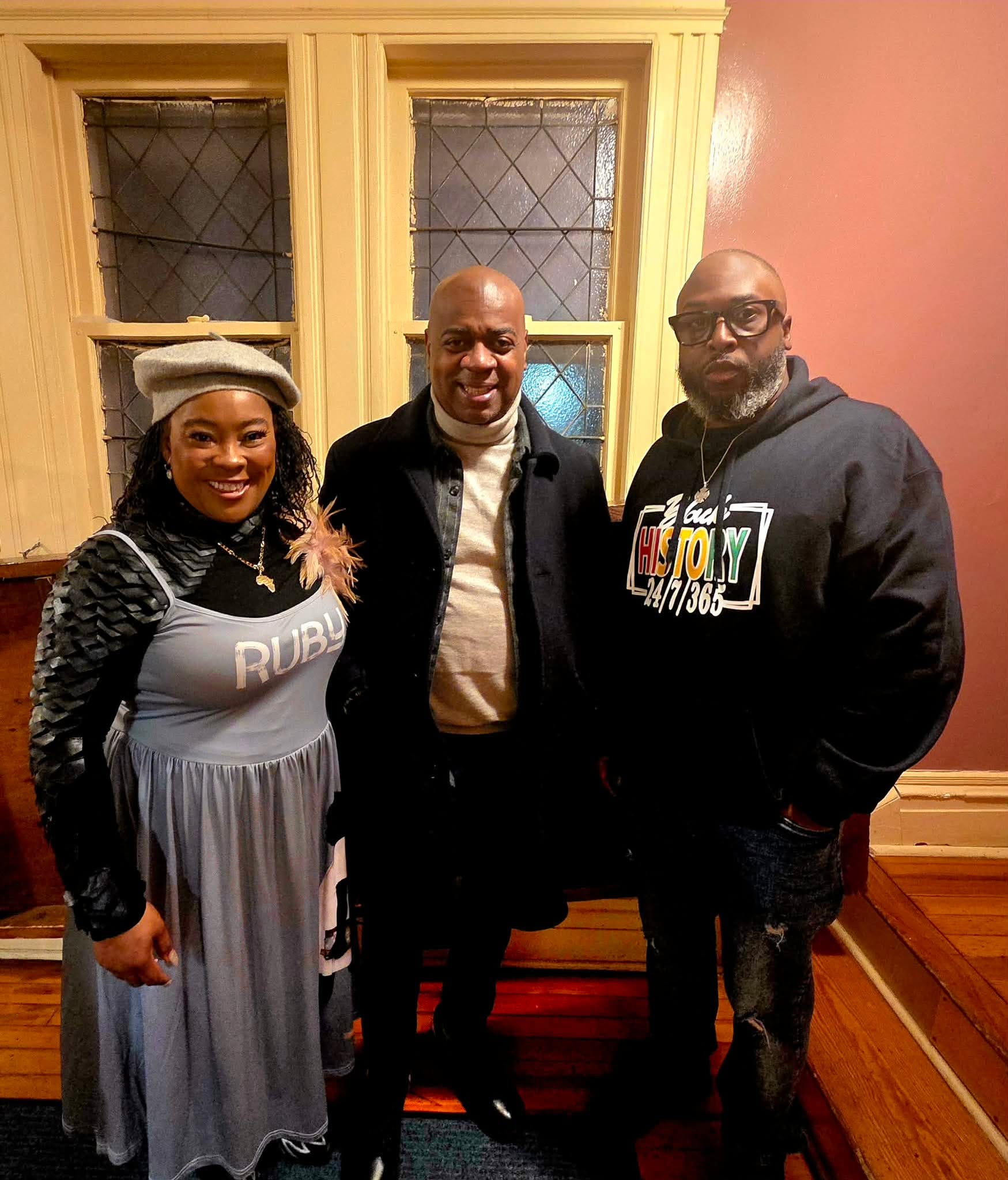
Mayor Ras Baraka’s presence mattered—not as a celebrity drop-in, but as a signal about what this moment required from public leadership. A Black mayor of the largest city in New Jersey city did not treat the Patrick Thomas case as “Bloomfield’s internal issue.” He treated it as a regional civil-rights and public-safety issue: if a noose can be tied and displayed inside a public institution, in front of multiple coworkers, and then minimized, that is not a private personnel matter—it’s a warning about what a town will tolerate inside its systems. Baraka showing up made visible what many officials prefer to keep invisible: that racism travels through municipal structures, not just individual hearts, and that solidarity has to travel too.
That’s what made the absence in the room just as significant as the presence. No other mayors appeared. No elected officials from Bloomfield’s town council were there—except Councilwoman Tracy Toler-Phillips. In a moment when a firefighter had been publicly degraded in his own workplace, when the community was organizing across towns, and when state-level legislation was being introduced in direct response, Bloomfield’s elected leadership largely chose not to be seen. And in politics, absence is rarely neutral. It reads as calculation: let the community expend energy, let the story cool, let the burden of “doing something” fall on organizers, advocates, and neighboring municipalities.
Newark Mayor Ras Baraka framed his presence as solidarity—showing up for “a brother” in a neighboring town—and he stressed that struggles are connected, which means people must be connected too. He argued that the national climate had been stripping away “guardrails,” creating an environment where racism and discrimination felt increasingly socially and institutionally permissible. He linked this to intensified attacks on Black history, higher education access, and DEI—attacks he described as fundamentally targeting Black and brown communities.
His core message was collective push back: change would only happen if “a room like this” kept showing up, consistently confronting bigotry and refusing to normalize it. He insisted that fear should not belong to those being targeted; it should belong to those choosing to be hateful. He closed by thanking the audience for solidarity and underscoring the stakes: racism has no borders, so the fight against it cannot have borders either.
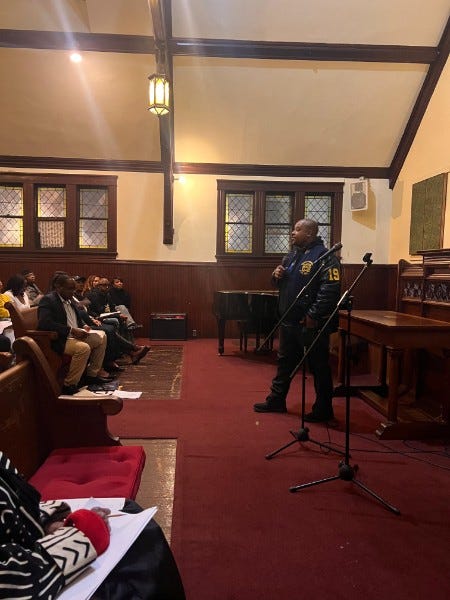
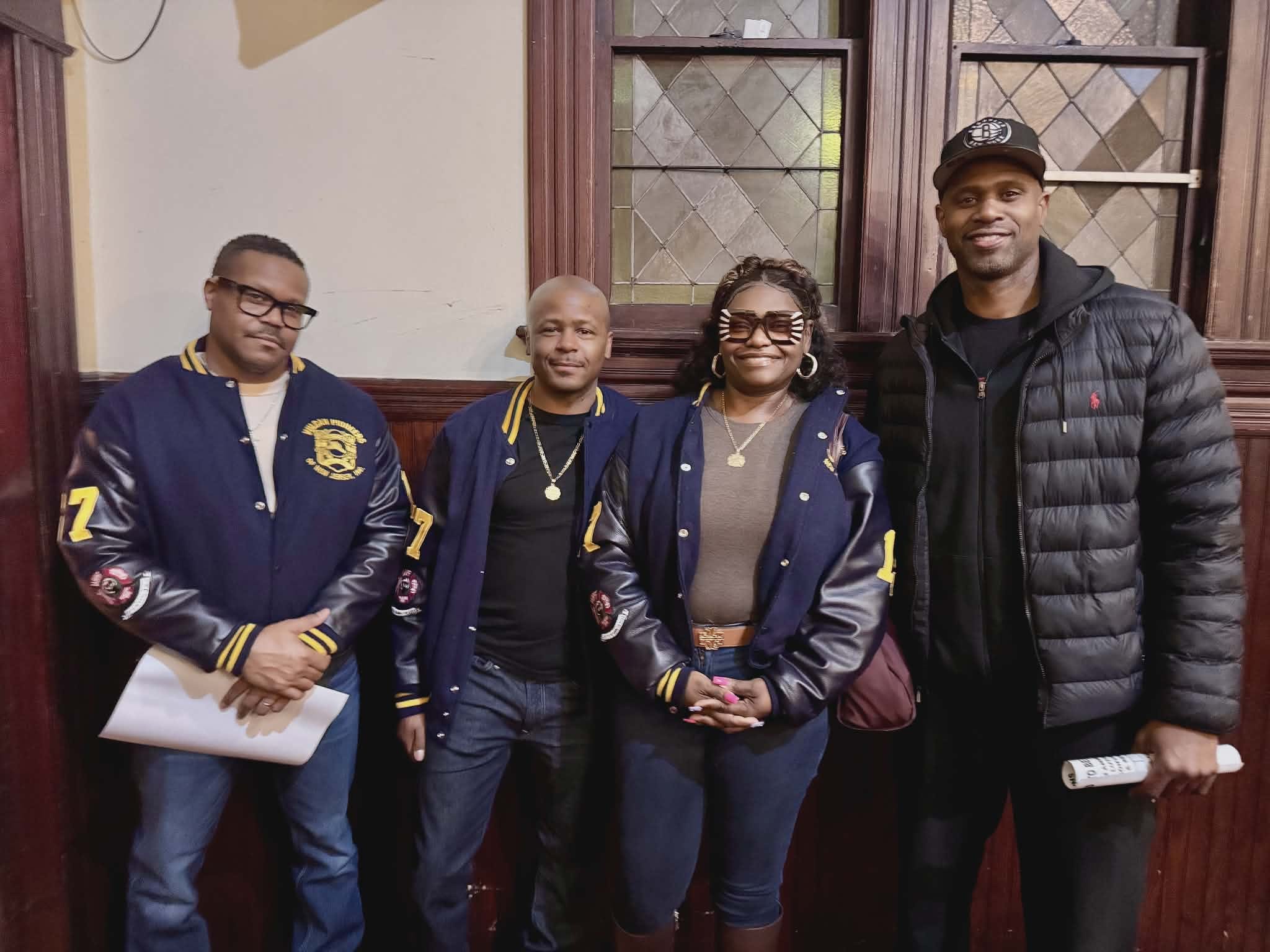
Husain Tyler, president of the Vulcan Pioneers of New Jersey, spoke about racism as a systemic firehouse problem, not an isolated incident. He emphasized that the Vulcans had been fighting this fight for decades and noted that Patrick Thomas had recently become a member. Listening to him made me want to dig deeper into the history of the Vulcans in New Jersey and New York—because that history explains why we are still dealing with entrenched discrimination in departments today. (I’ll be writing more on that soon.)
Sen. Britnee Timberlake spoke with urgency and precision. She said she had been “standing with Firefighter Patrick Thomas,” and she refused to let the incident be softened into “controversy” or “misunderstanding.” “It was a heinous act of violence,” she said, acknowledging the repeated trauma for Thomas and his family whenever the community had to revisit the incident—but insisting, “We have to continue to speak about it until there’s true accountability.”
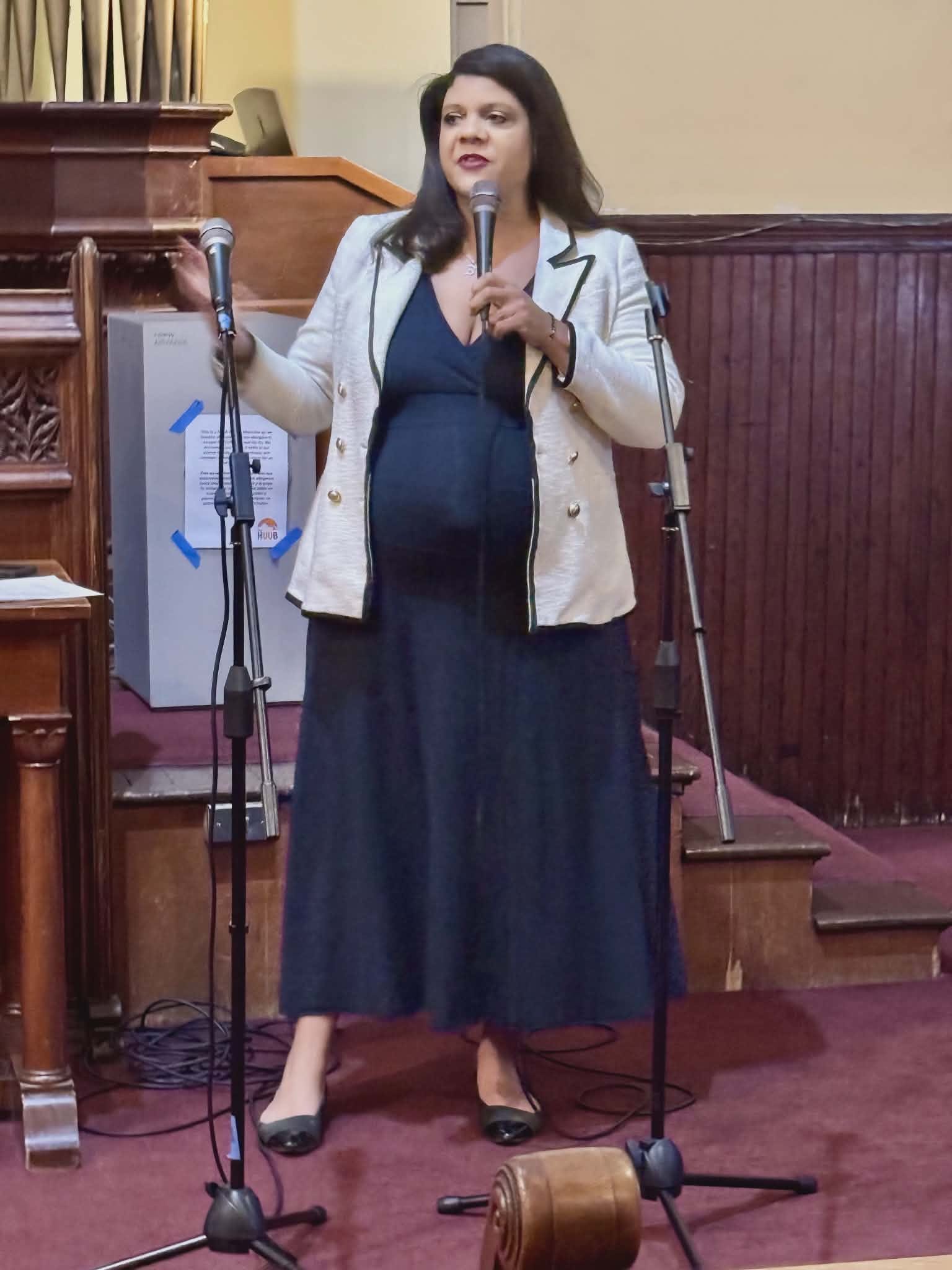
She then laid out a three-bill legislative package aimed at closing loopholes and forcing consequences:
With S-3706, she said she was removing the “presumption of knowledge” so perpetrators could not hide behind ignorance: “You do not have to know that a noose, a Confederate flag, or a Nazi symbol is offensive… in order to be found guilty for a racial bias crime.”
With S-3715, she described a school-based intervention response to rising bias incidents in K–12 settings. She was blunt about the stakes of leaving it unaddressed: “You cannot have somebody… participating in such hateful behavior sitting next to other children in diverse settings.” The goal, she said, was prevention and early interruption: “We’re trying to catch this type of behavior young,” so it did not harden into entitlement “when they do get into spaces of power and of privilege.”
With S-3714, titled the Justice for Firefighter Patrick Thomas Act, she said civil service workers convicted of certain egregious crimes, including racial bias crimes “will not to get their pension.”
Senator Timberlake grounded this policy push in her own life: growing up navigating racism inside her own family, and learning the power of organized presence from her mother, who mobilized peaceful counter-protests so there would be “more of us, people in support of love, than there are of them, people who are preaching hate.” That lesson stayed with her: “When you show up and you organize, you really can change systems.”
She also connected the local situation to broader political conditions, including ICE terror, arguing that it was “not an immigration issue alone,” but “an issue that impacts everybody.” And she closed by returning to the noose incident as evidence of a deeper institutional culture problem. Seeing the noose displayed in front of multiple firefighters and watching someone “chuckled and walked by” showed, in her view, “an indication of a greater cultural issue inside the system.” She described the response she had wanted from leadership: “Let’s sit down, we’re all ears. How can we fix this?” Instead, she said, she saw minimizing, dismissal, and attacks on key voices. “You have to have respect for Black women in order to do that,” she said, and it was hard to miss that her critique was as much about power as it was about policy.
Breaking bread, building a coalition
After the speeches, we moved into the sanctuary where we were greeted with a warm meal. It’s worth noting what this does to a meeting. These gatherings didn’t feel like sterile town meetings. They felt like communion: people breaking bread, talking, and making each other feel less alone. That matters. Movements don’t only run on outrage. They also run on care.
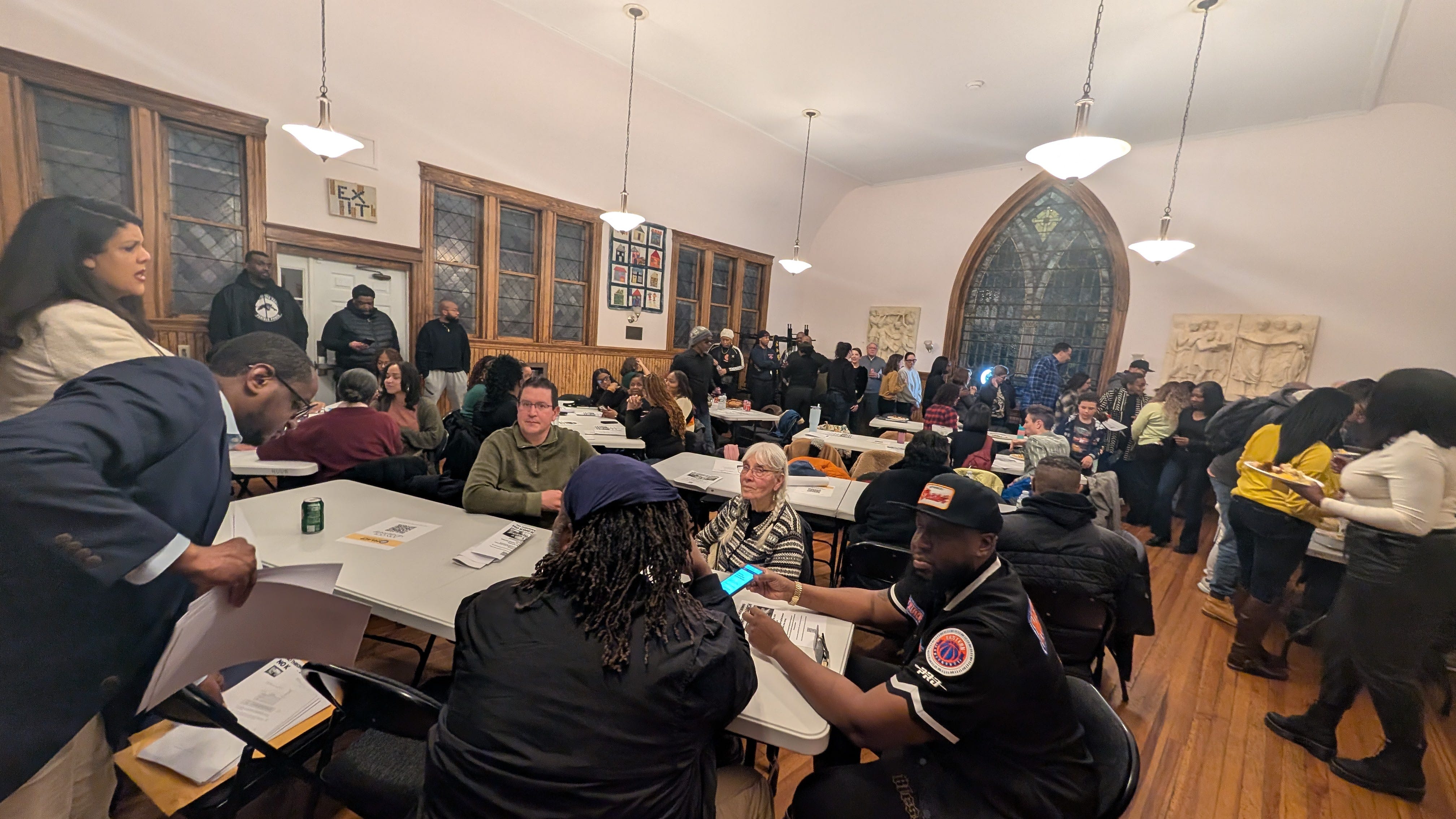
In this part of the evening, Joy Willis and Kasey Dudley spoke with urgency about what Bloomfield had been willing to tolerate and how long the town had tried to manage this as a PR problem rather than a cultural crisis.
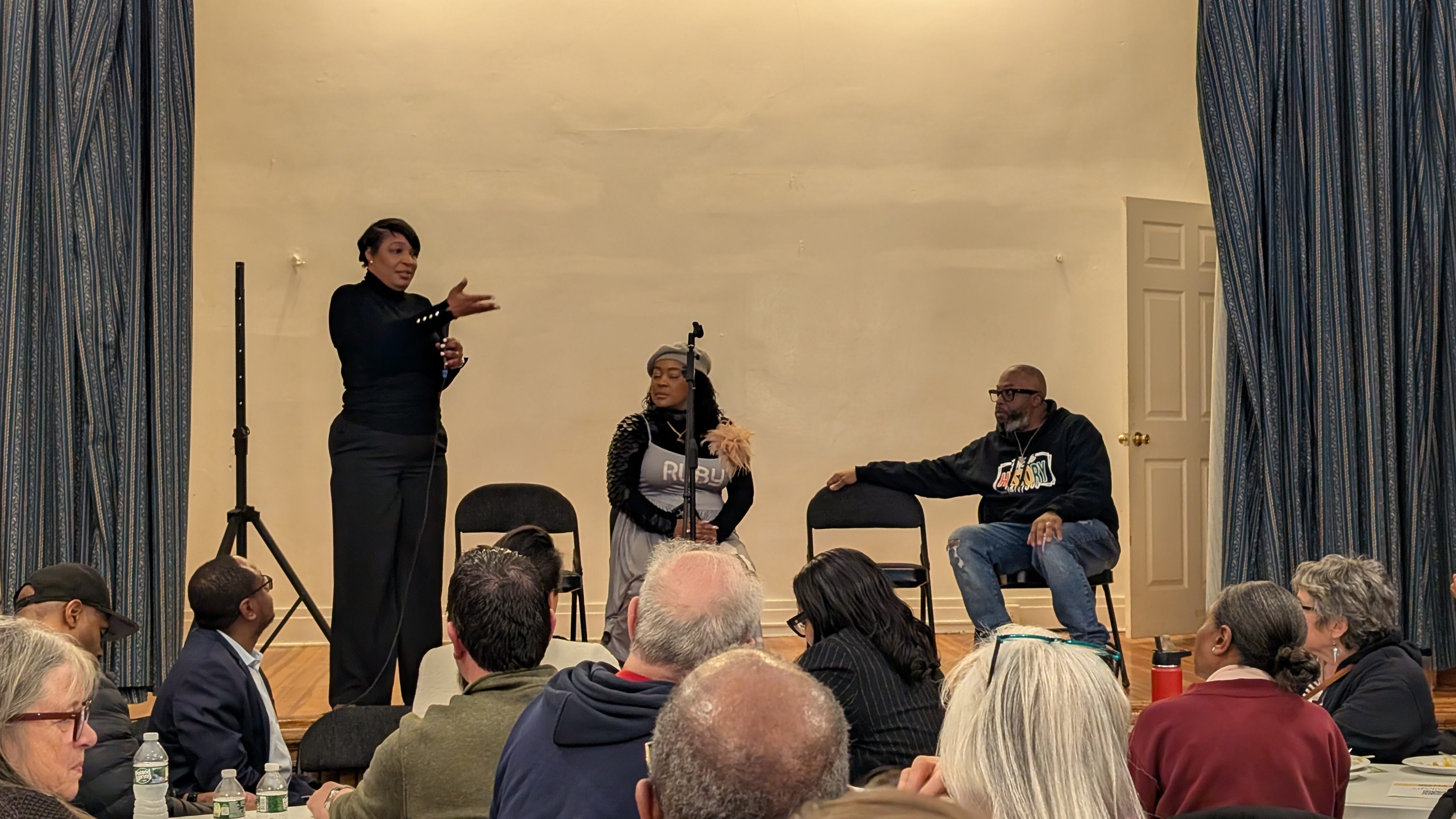
Danielle K.S. Thomas, President of NAACP of Oranges and Maplewood Branch, urged members of the community to join NAACP as an organization that is focus on achieving “equity, political rights, and social inclusion by advancing policies and practices that expand human and civil rights, eliminate discrimination, and accelerate the well-being, education, and economic security of Black people and all persons of color.”
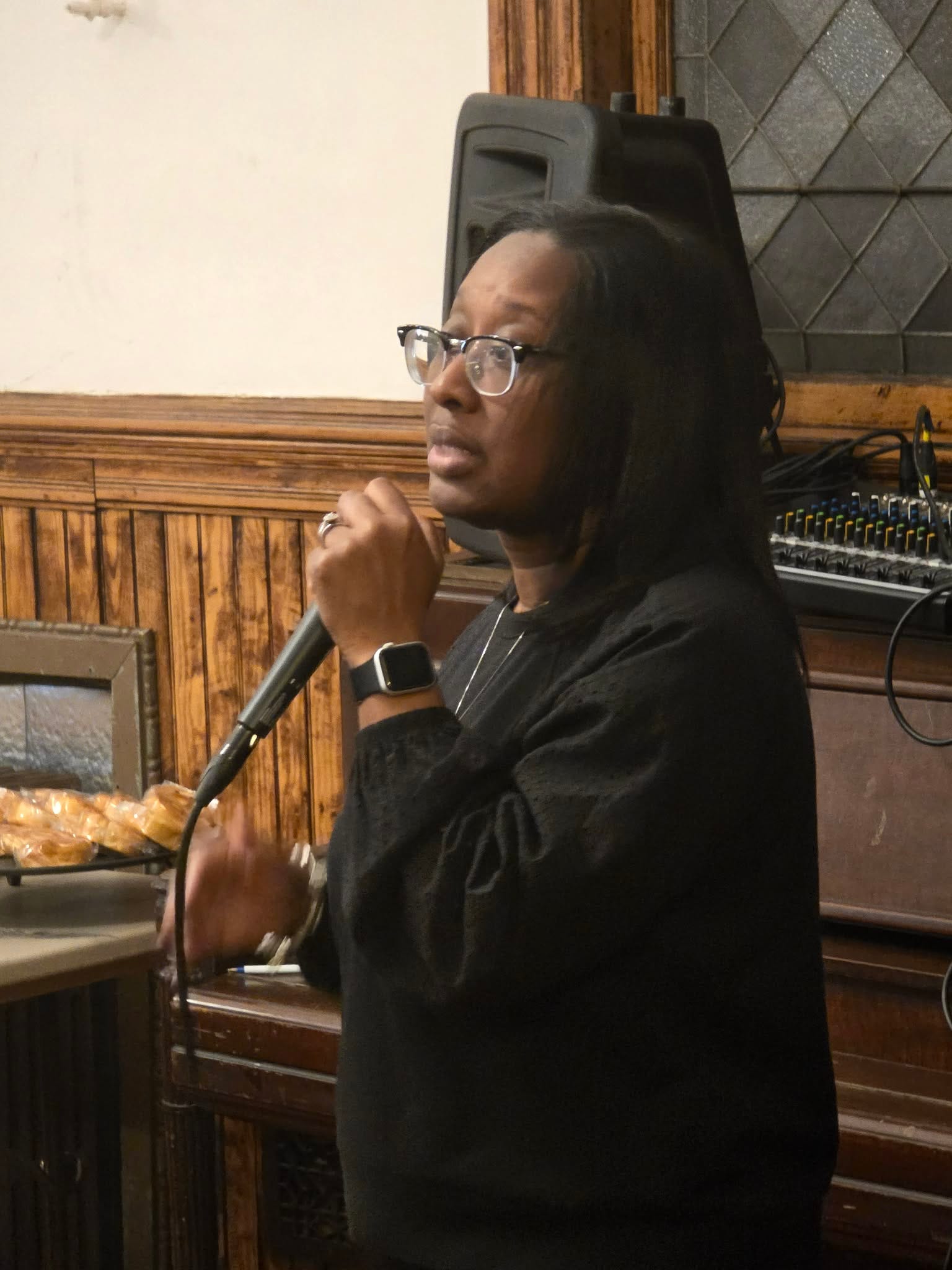
Then Larry Hamm came to express support for Patrick Thomas, again, and to place this moment in a longer arc. He spoke about his father and grandfather—both veterans—being buried in Glendale Cemetery in Bloomfield (WWII and WWI, respectively). He recalled the 1984 Jesse Jackson campaign and the Rainbow Coalition—working people, poor people, the middle class, and everyone who wanted freedom, justice, and equality. Bloomfield resident Neal Gorfinkle, who had been part of that coalition in the 1980s, was in the audience. Hamm urged everyone to build the kind of diverse coalition that was already present in the room and to use it to root out racism in Bloomfield’s fire department and beyond.
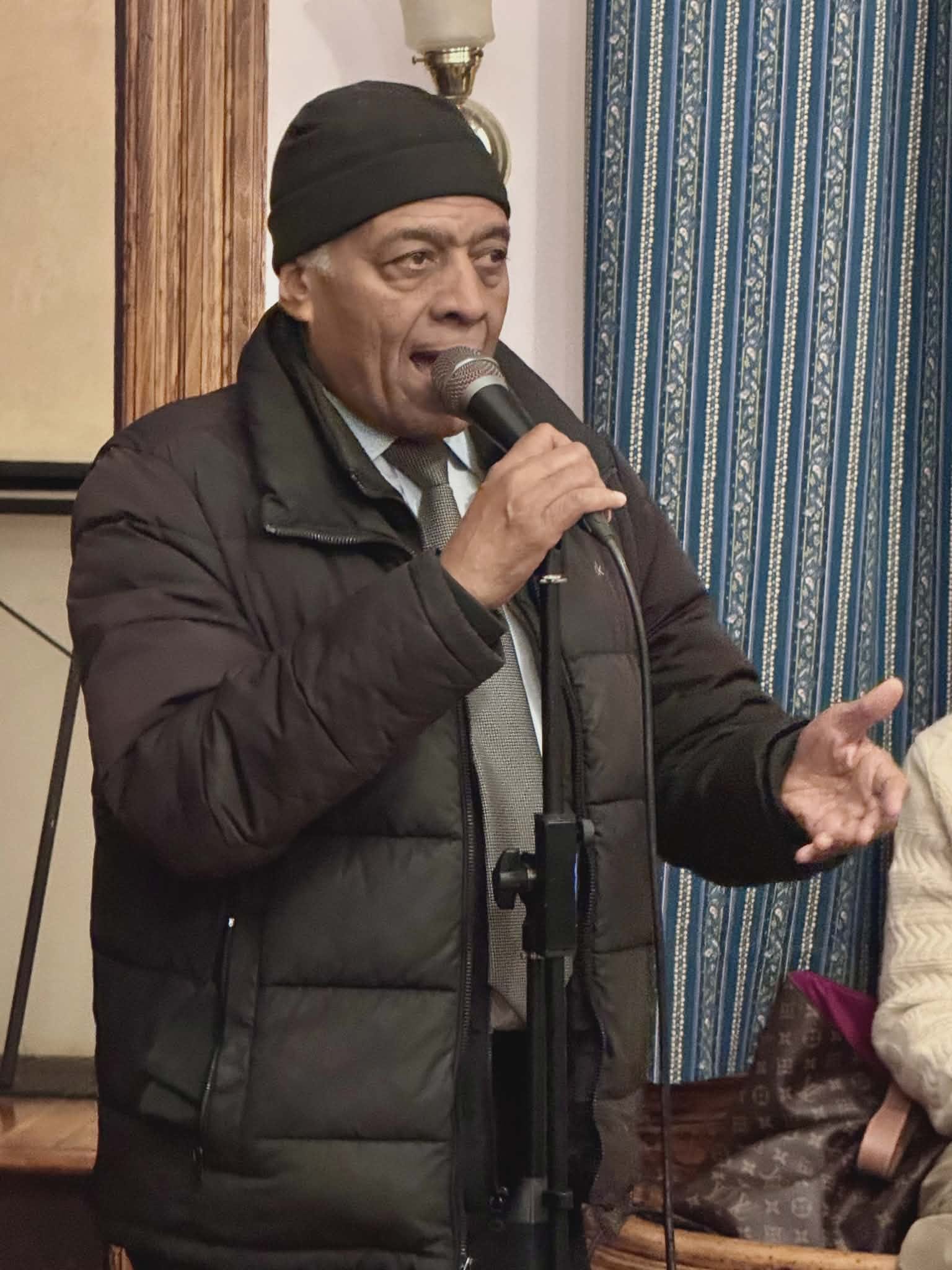
Several other speakers and audience members returned to a simple point: keep showing up. It is easy for a town to dismiss one or two “regulars” as nuisances. It is much harder to dismiss an organized, growing group.
Hearing from Patrick Thomas
Finally, we heard—publicly and directly—from Firefighter Patrick Thomas. He spoke graciously about his experience in the department and how much the noose incident had affected him. His family was there, seated in the audience, supporting him. Even without dramatic language, his demeanor communicated what trauma looks like when you’re still carrying it.
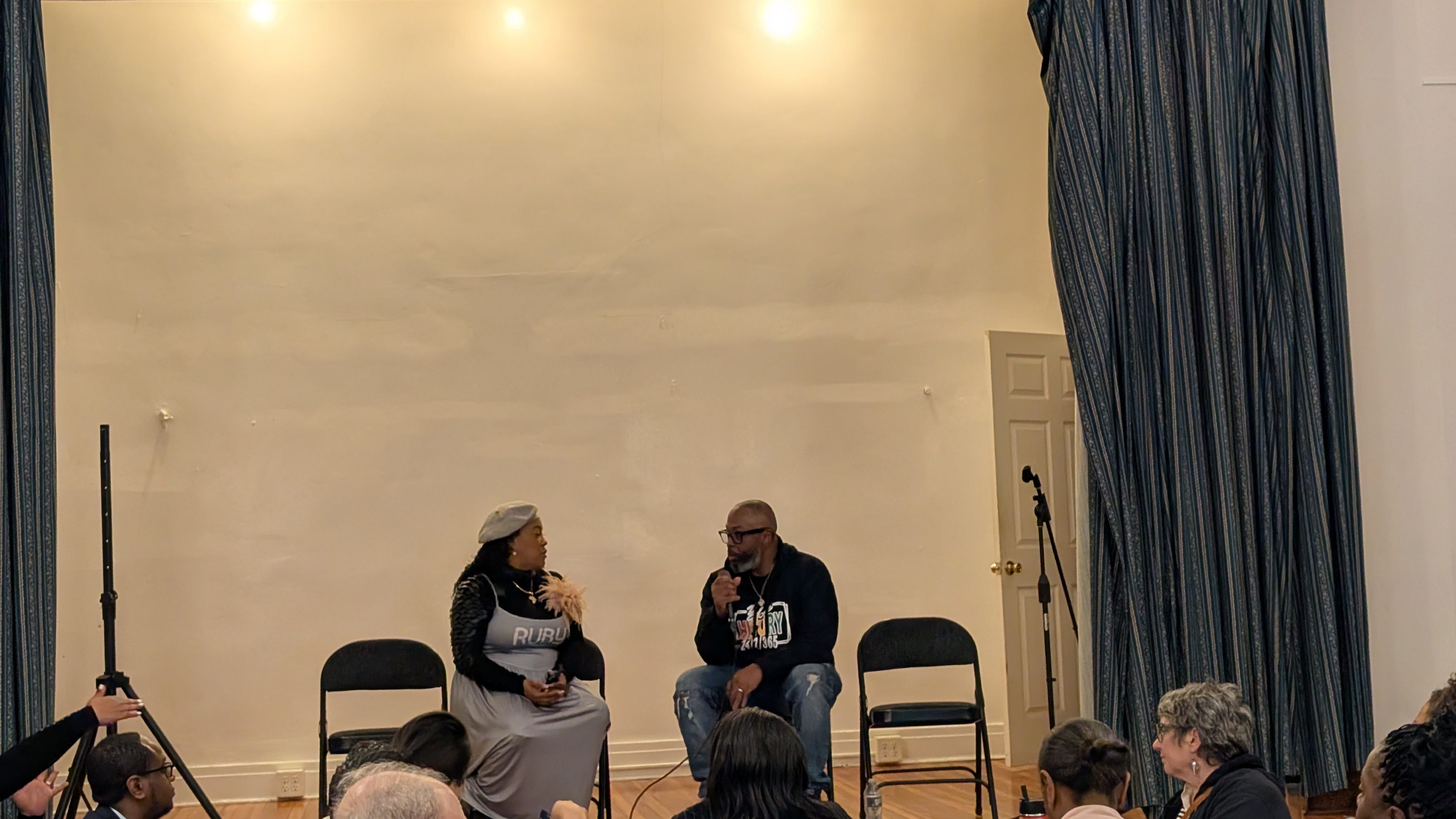
He described first serving as a volunteer firefighter and later becoming a paid firefighter in Bloomfield. He noted that there were only four Black firefighters in the Bloomfield Fire Department, which he framed as evidence that Black firefighters did not feel welcome. He urged community members to keep showing up at Bloomfield social events to make it undeniable that we belong here, and that the town does not get to define “community” in a way that excludes the people it marginalizes.
It was also powerful to see support from within the department: his colleague Bobby Baker came on stage, stood with him, and spoke about his own experience since joining the department in 2004.
What comes next: action
The mayor and council may feel that they did everything right and followed the rules. But what we have seen instead is a familiar pattern: minimize, contain, and wait out the news cycle, while the community does the work of showing up, organizing, feeding people, building coalitions, and refusing to let the story die. If Bloomfield truly supported Firefighter Patrick Thomas, we wouldn’t be relying on regional solidarity to fill the leadership vacuum. The measure is simple: not who says they care, but who is willing to impose accountability and change the culture that made the noose possible.
As the meeting closed, people were urged to scan the QR codes on the tables and take concrete steps:
Join and collaborate with the Orange & Maplewood Chapter of the NAACP
Join the letter-writing campaign
Help organize the next meeting or rally
Grassroots organizing
Because solidarity that doesn’t move becomes sentiment. And last night, the room felt clear on the difference.


Dr. Satenik Margaryan has captured the evening as well as recent and historic events related to this situation in Bloomfield precisely.
Bloomfield repeatedly tries to manage the optics of racism rather than uproot the structure. And extremely important is the fact that racism in a firehouse is uniquely corrosive: firefighters literally depend on one another for survival. A department cannot preach brotherhood while tolerating hate.
The fact that fire chief at the time of this "incident" Lou Venezia is the brother of the former mayor (now Assembly Whip) Michael Venezia, who appointed him is still in that position says all you need to know about Bloomfield. Along with the fact that he's being protected by our current mayor Jenny Mundell. They "followed the rules". That's all that's important to them?